For my first lesson with my kindergartners I wanted to ease them into moving and discover new and familiar ways they can move their bodies. We started out in a circle sitting and I went over the 3 basic rules/expectations I have for all my classes: BE Safe, BE Respectful, BE a mover. Then we did a fun stop and go moving activity. I plaid a song that had various pauses so when the music was playing they would follow along by moving one body part and when it stopped we all froze. We continued through all the body parts and eventually moved to standing and moving our whole bodies. The students really enjoyed the game of having to freeze and getting all their wiggles out!
I then went over the 5 basic locomotor steps (walk, run, jump, hop, leap) and had a specific signal on the drum for each one. They picked them up a lot quicker than I thought! Then we got to dance with ribbons to a fun song while I yelled out a locomotor step every once and a while to make sure they remembered them. The kids really enjoyed dancing and were excited for the challenges I gave them.
Tuesday, September 26, 2017

Monday, January 16, 2017
Navajo Indians
For this lesson we learned about the Navajo Indian tribe and they're specific characteristics. First we did a speech led warm up to learn their characteristics through movement.
I read this script below as the dancers responded with the guided movement...
I read this script below as the dancers responded with the guided movement...
The Navajos' name for themselves is Diné, meaning "the
people."
*As you walk look at
the many people in this class and wave to your friends
Live in the region of the 4 corners (Utah, Arizona,
Colorado, New Mexico)
*Find a group of 4 and
stand in a circle. Each put your right hand into the middle to show 4 distinct
corners. Now walk in a circle, switch to your left hand and walk in a circle.
When the Navajos first originated they lived in Hogans (dome
shaped building made from wooden poles and tree bark and were covered in clay)
*Find a new group of 4
and have 3 people create a dome shaped hut with 1 person inside
*Now everyone walk
around the room
In the Navajos early years they mostly traveled by footstep
and used their dogs and sleds to carry supplies. When the Europeans brought
horses to America they were very grateful for this more efficient way of travel
*now travel around the
room galloping
Navajo men and women used to have distinctly different jobs
Women often made
woven rugs and clothing
*Boys freeze, Girls
weave around them
Navajo men were usually warriors and hunters
*Girls freeze, Boys
carefully perform sharp fast warrior slices and kicks around them
The Navajo Indians were also skillful farmers
*Find a low shape on
the ground and slowly grow into corn, squash, beans, and peaches (these are
things they grew a lot) and freeze in one of these plant shapes
After performing this warm up we gathered as a group and quickly verbally reviewed the characteristics we had just danced.
Then, I introduced another characteristic of the Navajo's, and many other Native American tribes, was to perform cultural dances which tribes still do today. I then introduced the Yeibichai dance, a popular dance performed by the Navajo Indians. We briefly went over the characteristics and movement qualities this dance had then using those qualities we made our own version of the dance.
It was fun to see the kids creativity and really get into the spirit of respecting and getting excited about another culture and their traditions.
Wednesday, November 9, 2016
Utah Biomes
Last week I gave a lesson on 3 different biomes found in Utah (Forests, Deserts, and Wetlands). This lesson was given in a story style (that's what I like to call it at least). So in other words, I wrote out a script that taught the students about the 3 different biomes and their characteristics and had movement prompts that would have them physically experience what their learning while listening at the same time. I like this method of teaching since it keeps the kids moving the whole time but it also takes a lot of cooperation and listening from the students to make it go smoothly.
Here is the script I read below...
Forest-
·
Filled
with lots of trees. These trees help Utah be filled with fresh air as they turn
carbon dioxide into oxygen we can healthfully breathe in.
o
Everyone take a nice big deep breath
in and slowly blow it out and thank the tress
·
One
tree found in Utah forests is called the Quaking Aspen Tree- these trees have
tall and skinny trunks and their leaves quake at any slight winds
o
Stand tall and straight and quiver
hands to represent the leaves
·
Within
in the trees there are lots of animals. One animal found in Utah forest in the
Red Fox. They’re nocturnal (usually active at night) and are great hunters
o
Number 1’s, do sneaking/ low movement
around the trees. Find one tree to hide behind and jump out to the right to
scare your prey (switch roles)
Desert-
•
Deserts
are very dry and hot. The yearly rainfall is less than 10inches and it can get
up to 117degrees in southern Utah. Aspen and pine trees found in Utah forests
would never survive.
o
Start
in a high tall aspen tree shape and slower melt and shrivel all the way to a
very low shape on the ground. Once you find you low melted shape stay frozen.
•
Now,
just because the deserts in Utah are very hot doesn’t mean there are no plants
there. The plants that grow in the desert just have to adapt and change how
they live. One common plant found in Utah deserts is a cactus.
o
Everyone pretend you are a cactus
seed. Start to slowy move and grow bigger. As you grow bigger think of what a
cactus looks like and show me in your movement. What shape does it have? Is it
tall or short? Is it fat and round or long and skinny? What shapes do its arms
have? Are they crooked or bent?
o
Next think about what grows on a
cactus and show me in your movement. Cactus are often sharp and prickly to
touch. Show me sharp and prickly movement. Cactus often have blossoms of
flowers on their arms. Can you show me how a flower might bloom?
•
One
animal that can be found in Utah desserts is a Jackrabbit
o
Everyone hop around the room on one
leg.
o
Everyone freeze in a low shape.
Number 2’s jump up high on the count of three and freeze in a high shape. Now
number 1’s.
• Jackrabbits
don’t just live miserably in the heat, but they have found ways to adapt to the
harsh weather. Their long ears are actually what keep them cool by containing
lots of blood vessels where warms blood flows to in order to release the heat.
o
Everyone walk and find a new place in
the room while releasing heat from your tall jackrabbit ears.
Wetland-
- Wetlands are lands inhabited
with lots of water. This water usually comes from another source like a
large river.
- Everyone start on this side of the room and let’s flood
the wetland with water from the river by doing smooth, wavelike, and
circling movement. Spread throughout the whole space and continue to do
water like movement.
- We may often think swamps, mud
flats, and other types of wetlands are dirty and useless but the plants
and animals actually help keep wetlands clean and useful. Wetlands are
most helpful during floods as the plants and animals slow down and absorb
the speeds of the water. These same plants and animals also filter out any
pollution in the water.
- Number 1’s, spread out and make a plant or animal shape
in the middle of the room leaving small spaces in between for the water
to come through.
- Number 2’s, we will be the flood water and start on this
side of the room. We will do that same water like movement but start fast
and naturally get slower as we have to navigate and be filtered through
by the plants and animals (switch roles)
After we danced all 3 biomes we then created our very own biome that included characteristics, animals, and plants from all 3 of the biomes we learned about. I split the class into 3 groups, each representing 1 of the biomes. Each group was to create a way to enter into the space using the movement quality of an animal that lives in their biome while using the floor pattern they were assigned then spreading out in the space to freeze in a shape that resembled the characteristics of one of the animals that lives in their biomes. Each group entered in 1 at a times until all 3 biomes where represented in the space. Then they all danced together showing their differences based on the biome they represented.
This lesson was lots of fun and really helped the students to identify each biomes distinct and individualized characteristics and inhabitants.
Thursday, October 6, 2016
Dinosaur Tracks and Floor Patterns
Today we learned about dinosaur tracks through dance! We discussed quickly about how they were formed and preserved then learned about 4 different dinosaurs and what their tracks might have looked like. Each dinosaur was very different in how they moved and lived so we showed that through dancing different movement qualities.
Brontosaurus- Slow, Big, Heavy, Bound, Walk, Strong
Allosaurus- Fast, Sharp, Slash, Jab, Run
Ceratopsian (Triceratops) - Tetrahedron (3 body parts touching the ground), Slow, Stomp, Pushing
Pterosaur (Pterodactyls)- Fast, Smooth, Glide, Light, Jab, Stretching, Free
We then discussed that paleontologist often found a series of dinosaur tracks and would have to determine what the dinosaurs were doing based off the pathways the dinosaurs took. We then explored 3 different pathways we can use in dance (staight, curved, and zig zag).
Lastly, the class was split into 4 groups, each representing a different dinosaur. They then had to creates their own dance using the 3 different floor patterns while still showing their dinosaurs unique way of moving.
Here's a link to the lesson plan...
Teaching how Movement Qualities can portray different Personalities

Today we learned the 8 basic locomotor steps and 4 different movement qualities (sharp, smooth, heavy, and light). We compared those qualities to different personalities and how they could be portrayed through movement. Each student decided which movement quality matched best with their personality and then made their own signature dance move using that quality. Lastly, they got into groups of 4-5 and taught everyone each of their dance moves then put them into a specific order. They performed each of their dances for the class to show how different personalities can work together to make something great.
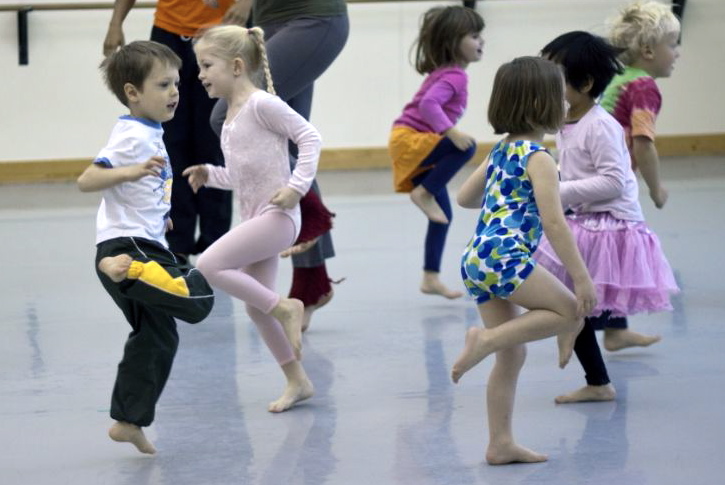
This was a great first lesson to help get the students familiar with basic movement and to help them realize that it's okay to move differently and make the movement their own to show their individual creativity and personalities.
Here's a video that better explains the 8 locomotor steps we learned.
Here's a link to the lesson plan...
Subscribe to:
Posts (Atom)